A step-by-step protocol to rebuild your gut ecosystem with prebiotics, polyphenols, and resistant starches.
Phase 1 Daily Snapshot(Month 1–3)
Everything you'll be eating daily once fully ramped up.
Step 1
Polyphenol "Power-8"
1 cup Blueberries (125g)
1/3 cup Raspberries (60g)
1/2 cup Cranberries (50g)
1/4 cup Pomegranate (40g)
Step 2
Soothing Pectins & Beta-Glucans
1 cup Cooked Carrots (75g)
1–2 Kiwifruit (75–150g)
2 tbsp Oat Bran (up to 1/3 cup)
Step 3
Resistant Starch
1/2 Purple Potato (75g)
1/4 cup Red Lentils (48g cooked)
Step 4
Sunfiber (PHGG)
1 scoop (5g) PHGG
This is one of the most gentle prebiotic fiber powders to start with that can support bowel regularity and help alleviate bloating.
How to Progress
Your primary goal with nutrition is to begin adding in each of these foods one-by-one, until you are eating all of these foods DAILY. Add one new step every 1–2 weeks (Step 1 → Step 2 → Step 3 → Step 4), letting your gut adjust before layering in the next one.
These are gentle low FODMAP fibers that will help to reduce inflammation, suppress certain inflammatory bacteria, and increase the production of butyrate which will help to heal and repair your gut over time. Once you're comfortably eating all of these foods daily and symptoms have stabilized, you'll be able to move onto Phase 2 (month 3–6) where we introduce more fermentable fibers to strengthen your good gut bacteria even more.
Add-on
Constipation Clearer
Add this if you struggle with slow motility or incomplete bowel movements.
1–2 tbsp Soaked Chia Seeds (12–24g)
1–2 cups Cooked Spinach (75–150g)
1/3 cup Raspberries (60g)
2 Kiwifruit (150g)
Why This Matters
And why simply relying on just taking supplements isn’t going to resolve your gut issues long term
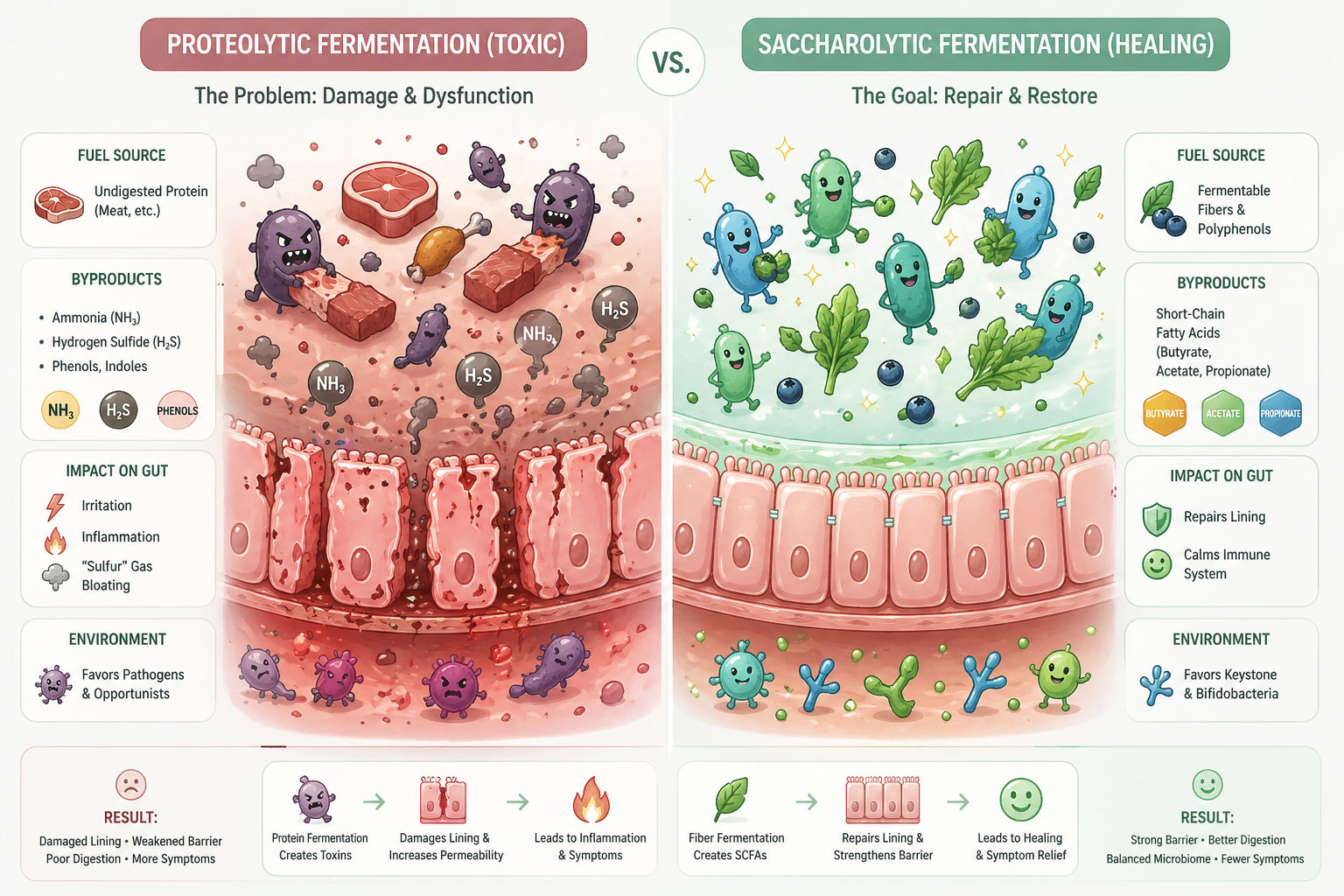
IBS or SIBO is not just a “too much bad bacteria” problem. In the vast majority of cases, it involves a damaged & dysfunctional ecosystem: impaired gut motility, poor digestion, lower microbial diversity, a weakened gut barrier, and altered fermentation patterns.
Your gut bacteria prefer to feed on carbs/fiber, and when they do, they produce specific compounds like Butyrate that are extremely nourishing and healing for your gut.
However if you don’t consume enough of these foods (or if you have poor digestion & motility), your gut bacteria will begin fermenting excess proteins instead. While protein is extremely beneficial for us, we do NOT want our gut bacteria fermenting it and breaking it down. When this happens in excessive amounts, it leads to the production of extremely inflammatory/toxic compounds that can be damaging to your gut, and create an environment that favors pathogens vs. good bacteria. 🦠
If you’re experiencing chronic digestive symptoms, you can already assume this is happening at some level. This is also a big reason for why people will go on round after round of antimicrobials, and their symptoms never fully resolve.
This is why the Gut Reseeding Process outlined on this page is one of the MOST IMPORTANT factors to healing your gut. You can take all the best supplements in the world, but without this piece, it’s going to be very difficult to see any sort of lasting progress.
In short:
Proteolytic Fermentation (Protein Breakdown) = BAD
Saccharolytic Fermentation (Fiber Breakdown) = GOOD
Terms You Should Know:
Prebiotic: A type of fiber or compound that feeds beneficial gut bacteria and helps them grow.
Fermentation: The process where gut bacteria break down food, especially fiber, into beneficial compounds and gases.
Proteolytic: Refers to the breakdown of protein by gut bacteria, which often produces more irritating and inflammatory byproducts.
Saccharolytic: Refers to the breakdown of carbohydrates (like fiber) by gut bacteria, which produces beneficial compounds that support gut health.
Short-chain fatty acids: Helpful compounds made when bacteria ferment fiber that support the gut lining, reduce inflammation, and improve digestion.
Butyrate: A key short-chain fatty acid that fuels colon cells, helps repair the gut lining, and reduces inflammation.
Bifidobacteria: A group of beneficial bacteria that help improve digestion, lower inflammation, and support a healthy gut environment.
Akkermansia: A beneficial bacteria that helps maintain and repair the gut lining and is linked to better gut and metabolic health.
F. prausnitzii: A beneficial bacteria that produces butyrate and plays a major role in reducing inflammation and supporting gut health.
Phase 1: Gentle Priming (Months 1–3)
Goal: Begin shifting the gut environment to reduce inflammation, feed beneficial keystone species, and gently inhibit pathogens.
This first phase is all about improving the gut environment without pushing it too hard.
For most people with IBS or chronic digestive issues, the gut is too sensitive to handle a lot of fiber or fermentation right away. So instead of jumping into aggressive prebiotics, we start with gentler fibers that are easier to tolerate, help move things along, and begin supporting beneficial bacteria like Bifidobacteria.
Bifidobacteria play a key role in keeping your gut balanced. They produce acids that lower the pH of the colon, which helps crowd out harmful, inflammatory bacteria and creates a better environment for beneficial ones to grow. Building up these bacteria first helps reduce inflammation, calm food reactions, and makes your gut more ready to handle stronger fibers later on.
The different foods in Phase 1 will also help to support certain bacteria like Akkermansia and Faecalibacterium prausnitzii that help to heal & repair your gut lining.
Step 1
Step 1: The Polyphenol "Power-8" (8oz Daily)
Why polyphenols matter
Polyphenols aren’t traditional prebiotic fibers, but they’re one of the most effective ways to shift the gut environment in your favor. They help reduce inflammation and have been shown to limit the growth of certain harmful bacteria like E. coli and other opportunistic microbes.
At the same time, they support the growth of beneficial bacteria like Akkermansia, F. prausnitzii, Bifidobacteria, and Lactobacillus. These are key players in healing the gut lining and improving immune function.
In simple terms, polyphenols do two things at once:
They help beneficial bacteria thrive, while making the environment less friendly for inflammatory bacteria.
This isn’t a “kill phase,” but it still helps rebalance the gut in a much gentler, more sustainable way.
Daily Target
1 cup Blueberries (125g)
1/3 cup Raspberries (60g)
1/2 cup Cranberries (50g)
1/4 cup Pomegranate (40g)
Daily Estimate
140 Cal
34g Carbs
11g Fiber
2g Protein
1g Fat
How to Consume
The Berry Bowl: Mix all berries in a bowl. Eat half with breakfast and half as an afternoon "brain boost" snack.
The Smoothie: Blend all ingredients with water or unsweetened almond milk.
Tip: Use frozen berries to create a thicker, sorbet-like texture. You can also add other ingredients like ginger, protein powder, etc... for additional calories for additional calories & gut health benefits.
Step 2
Step 2: Soothing Pectins & Beta-Glucans
Why pectins & beta-glucans matter
Pectins and beta-glucans are gentle, well-tolerated fibers that help support the gut without irritating it. They create a soothing, gel-like effect in the digestive tract while still feeding beneficial bacteria.
They help guide fermentation in a healthier direction, support short-chain fatty acid production, and improve the environment for the gut lining to heal.
This makes them especially helpful for anyone dealing with inflammation, irritation, or a highly sensitive, reactive gut.
Daily Target
1 cup Cooked Carrots (75g)
1–2 Kiwifruit (75–150g)
2 tbsp Oat Bran (may increase up to 1/3 cup)
Daily Estimate
185 Cal
41g Carbs
12g Fiber
4g Protein
1g Fat
How to Consume
Carrots: Buy frozen diced carrots. Steam 1 cup on the stovetop until soft. Toss with a little olive oil and sea salt alongside your dinner protein.
Kiwifruit: Slice in half and scoop with a spoon. Eat as your "dessert" after lunch or dinner; the enzymes in kiwi help your body break down proteins.
Oat Bran: Start with 2 tablespoons mixed into a smoothie or yogurt. As your tolerance grows, you can increase this up to 1/3 cup daily for maximum beta-glucan benefits. No cooking required; raw provides more resistant starch.
Step 3
Step 3: Resistant Starch (RS) Strategy
Why resistant starches matter
Resistant starch is one of the most important tools in this plan because it helps shift the gut away from protein fermentation and toward healthier short-chain fatty acid production (like butyrate).
When it reaches the colon, it feeds beneficial bacteria and supports key butyrate producers like Faecalibacterium and Roseburia. These bacteria help strengthen the gut lining, reduce inflammation, and improve the overall health of your entire gut.
In simple terms, resistant starch works by giving your gut bacteria a better fuel source. And when you change what they’re eating, you change what they produce, which helps reduce irritating, inflammatory byproducts over time.
Daily Target
1/2 Purple Potato (75g)
1/4 cup Red Lentils (48g cooked)
Daily Estimate
115 Cal
24g Carbs
5g Fiber
4g Protein
1g Fat
How to Consume
Purple Potato: Cut one medium purple potato into thin slices.Mix in a bowl with 1-3 tablespoons of Fody Foods Garlic-infused Olive Oil and sea salt.Bake in the oven at 400°F for 20-30 minutes.Add to a glass Tupperware container and cool in your fridge overnight.Eat 2-3 slices with each meal throughout the day, or as an easy snack.
Red Lentils: For maximum prebiotics, boil dry lentils or use a pressure cooker. If your gut is very sensitive, canned (rinsed) lentils are gentler as they contain fewer fermentable sugars, but they also have fewer prebiotics. Batch-cook, cool, and mix into rice or salads.
Step 4
Step 4: Sunfiber (PHGG)
Why PHGG (Sunfiber) is the best fiber to start with
PHGG is one of the best fibers to start with because it’s gentle, well-tolerated, and still very effective at improving the gut microbiome.
Studies show that regular use of PHGG can help to improve stool form and regularity while supporting beneficial bacteria like Bifidobacteria and butyrate producers. These bacteria play a big role in strengthening the gut lining, reducing inflammation, and supporting healthy digestion and motility.
Just like the other foods listed above, PHGG helps your gut bacteria shift away from protein fermentation, without causing the bloating that more aggressive fibers often do. This is a huge reason it can help with bloating, stool irregularity, and that "inflamed/reactive gut" picture that’s so common for people with IBS.
Daily Target
1 scoop (5g) PHGG
Daily Estimate
15 Cal
0g Net Carb
5g Fiber
0g Protein
0g Fat
How to Consume
Stir into your first glass of water in the morning. Start with 1 gram (roughly 1/4 tsp) and increase by 1 gram every 3–5 days until you reach 5 grams. It dissolves completely and is tasteless.
The "Constipation Clearer" Protocol (Daily Add-on)
Incorporate the foods listed below DAILY if you are struggling to have complete, daily bowel movements
Why this add-on matters
If motility is slow, even the best gut protocol can backfire. When stool sits in the colon too long, bacteria have more time to ferment leftover protein, which can increase bloating, irritation, and create a more inflammatory gut environment.
So this isn’t just about relieving constipation. Improving motility helps shift the gut environment, reduce irritating byproducts, and makes your body more tolerant to fiber overall.
Foods like chia seeds, kiwi, raspberries, and cooked greens help because they support both stool consistency and movement through a mix of soluble and insoluble fiber. Kiwifruit in particular has strong research behind it for improving regularity.
Getting this piece right makes everything else in your protocol work better.
Daily Target
1-2 tbsp Soaked Chia Seeds (12-24g)
1–2 cups Cooked Spinach (75–150g)
1/3 cup Raspberries (60g)
2 Kiwifruit (150g)
Daily Estimate
215 Cal
28g Carbs
16g Fiber
7g Prot
6g Fat
How to Consume
How to Consume:
Chia Seeds: Soak in 1/4 cup water overnight. Eat the gel by the spoonful in the morning or blend into a smoothie.
Spinach: Lightly sauté with olive oil and eat with breakfast or lunch.
Berries/Kiwi: Follow the portions alongside your main protocol recommendations.
Phase 2: Precision & Expansion (Months 3–6)
Continue Phase 1 while adding these advanced prebiotics.
Once the gut is more stable, you can start adding more targeted prebiotics like oligosaccharides and inulin. These fibers ferment more quickly and feed your microbiome more aggressively, which helps expand microbial diversity and more directly support beneficial bacteria.
They can significantly increase Bifidobacteria and boost butyrate production, both of which are key for strengthening the gut lining, reducing inflammation, and improving overall gut function.
Because they ferment faster, they can also be more reactive if your gut isn’t ready. That’s why we build a strong foundation first. Once you tolerate Phase 1 well, introducing these fibers allows you to take things to the next level and drive deeper, more meaningful improvements in the gut.
This is where we move from simply supporting the gut to actively building it.
These fibers are some of the most effective tools for increasing Bifidobacteria, which are foundational for a stable, healthy gut environment.
Why these fibers are so powerful
• GOS (Galactooligosaccharides): One of the most reliable ways to increase Bifidobacteria, even at low doses. Helps quickly shift the gut toward a more balanced, favorable state.
• XOS (Xylooligosaccharides): Very potent in small amounts. Supports Bifidobacteria while also helping improve bowel regularity and overall microbiome balance.
• FOS (Fructooligosaccharides): A classic prebiotic that feeds Bifidobacteria and helps support key beneficial species like Faecalibacterium, Roseburia, and Akkermansia.
Daily Target
1 Full Scoop MegaPre Prebiotic Powder
Daily Estimate
20 Cal
5g Carbs
4g Fiber
0g Protein
How to Consume
Mix into 8oz of water or your daily smoothie. Start with 1/4 scoop for the first week to ensure your Bifidobacteria don't "over-ferment," then slowly work up.
This is the acceleration phase, where everything you’ve built so far starts to compound. Inulin-containing foods ferment more quickly and push the microbiome to grow and adapt at a higher level.
At this stage, you see further increases in Bifidobacteria along with expansion of key beneficial species like Faecalibacterium, Roseburia, Eubacterium, and Akkermansia. This leads to higher production of butyrate and other short-chain fatty acids that play a major role in gut health.
This matters because it helps deepen microbial diversity, strengthen the gut lining, reduce inflammation, and improve overall digestive stability. It also continues shifting the gut away from protein fermentation and toward fiber-driven fermentation, meaning fewer irritating byproducts and more beneficial compounds that support a healthier, more resilient gut.
Daily Target
3 Asparagus spears (42g)
1 tbsp Chopped Onion
1/2 tsp Minced Garlic
5g Inulin Powder
Daily Estimate
45 Cal
10g Carbs
6g Fiber
1g Protein
How to Consume
Asparagus: Roast or steam 3 spears with dinner.
Onion/Garlic: Sauté lightly to "take the edge off" for the gut, or use raw if tolerated.
Inulin Powder: Stir into tea or coffee. Start with 1/8 teaspoon and build to a full teaspoon.
Realistic Timelines
Microbiome reshaping happens in phases. Here's what to expect at each stage.
1
Phase 1: Quick Wins
(Days 3–14)
What's happening
Your gut starts responding fast. Beneficial bacteria like Bifidobacteria increase, and you may notice early improvements in bloating, stool, or digestion.
What this means for you
You might feel better pretty quickly… but this stage is temporary. If you stop here, things can slide back.
2
Phase 2: Building Tolerance
(Weeks 3–6)
What's happening
Your microbiome starts adjusting to the new inputs. Digestion becomes more stable and your tolerance to fiber improves.
What this means for you
You should feel better overall, but your gut isn’t fully stable yet. This is where consistency really matters.
3
Phase 3: Real Gut Shift
(Weeks 6–12)
What's happening
The microbiome begins to truly change. Beneficial bacteria grow stronger, inflammation drops, and harmful bacteria start declining.
What this means for you
Less reactivity, better stool consistency, and more flexibility with food.
4
Phase 4: Stability
(3–6 Months)
What's happening
Your gut becomes more balanced and resilient. Fermentation patterns normalize and beneficial bacteria hold their ground.
What this means for you
Digestion feels consistent. Bloating is minimal. You can handle more variety without issues.
Even if you slip up for a few days, things don’t fall apart (this is the goal).
5
Phase 5: Long-Term Resilience
(6–12+ Months)
What's happening
Your microbiome is now diverse, stable, and adaptable. It can handle stress, food variety, and real life.
What this means for you
You’re no longer managing symptoms, and your gut is finally working WITH you.
Why This Takes Time
What it really takes to remodel your gut ecosystem.
You can't expect to take a fiber supplement for 2 weeks and have all of your symptoms disappear. We are remodeling an entire ecosystem that's been formed over decades of your life.
Because we're working on shifting:
pH & oxygen levels
Fermentation patterns
Bacterial composition
Immune signaling
Motility patterns
This process requires time, and most importantly, consistency. You can feel better in weeks, but it takes a few months to actually retrain your gut and permanently shift the ecosystem.
Always work with a qualified practitioner for personalized guidance, especially if you have existing GI conditions.